

Johnny Cash did not live a tidy story, and that is why every tribute still sounds like a hymn and a confession.
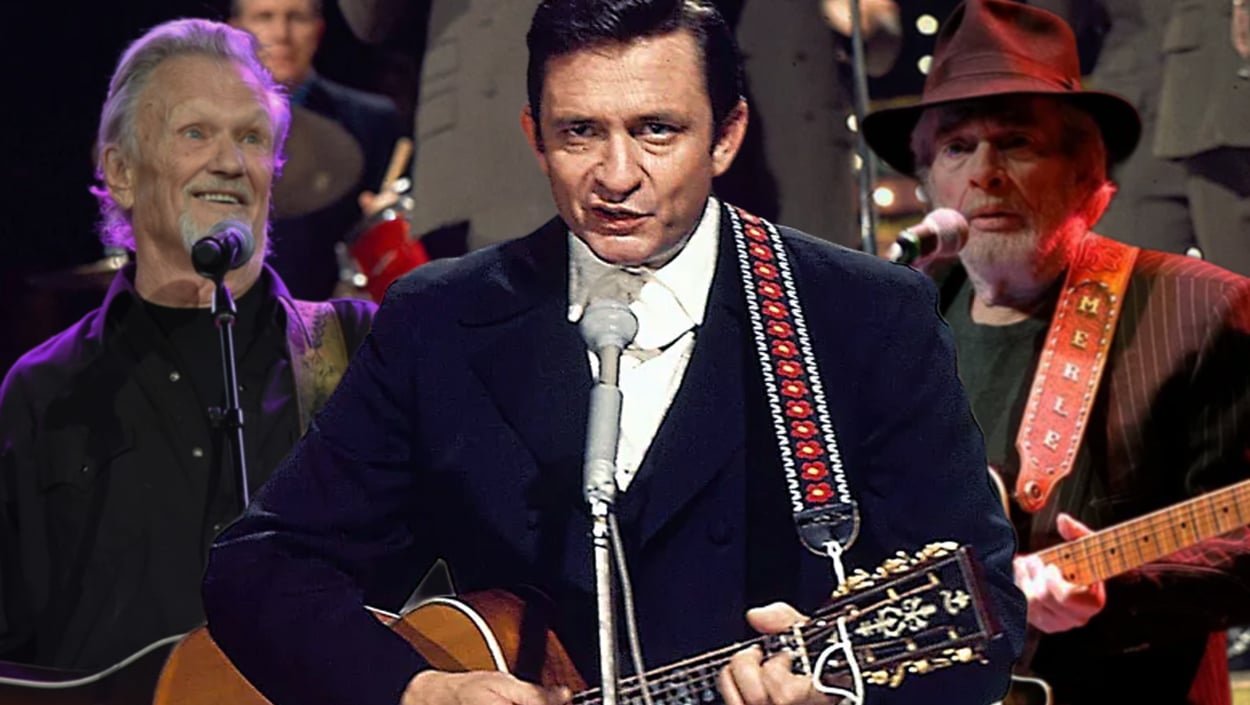
Twenty-two years after September 12, 2003, the Man in Black still holds the room, because his friends did not just write memories, they wrote proof. Bob Dylan called him the North Star and said you could guide your ship by him, and that “I Walk the Line” sounded like a voice from the middle of the earth. Dylan’s words were not polished praise for a press release. They were the shaky truth of a younger artist who had once been defended by Cash in print when the folk police came knocking. Cash told the scolds to let the kid sing, and Dylan never forgot. That is the kind of loyalty you cannot fake.
Merle Haggard took it from a different angle, straight from a prison yard. He first saw Cash at San Quentin in 1958, and the show was raw. Cash had lost his voice the night before, yet he owned the place. He chewed gum, stared down the guards, and gave the inmates the swagger they wished they could get away with. Haggard swore the next day every guitar picker in the joint was trying to sound like “Folsom Prison Blues.” Years later, when Merle’s star rose, Cash told him to tell the truth on national TV about being an ex-c𝐨n. “If you start off telling the truth, your fans never forget it.” That is a line you could carve into the Opry’s back wall.
Kris Kristofferson remembered being the janitor who kept handing songs to his hero. Cash did not record a one at first, yet he carried Kris’s lyrics in his wallet and later cut “Sunday Mornin’ Comin’ Down,” which changed Kristofferson’s life. To Kris, Cash was not danger for danger’s sake. He was integrity with a backbeat, the rare star who would stand up for people without a microphone. That is the thing about Cash that keeps echoing. He could sing about shooting a man in Reno, and he could also kneel with a Bible, and you felt both were real.
Bono told stories that mixed reverence with a little grin, which felt right. Cash could say grace with a poet’s heart and then crack a joke that reminded you he had not turned into a stiff saint. That honesty gave his songs dust and thunder. He called “Hurt” the best anti-drug song he had ever heard, and Bono called the video perhaps the best ever made. You can believe both.
Al Gore wrote about a neighbor in Hendersonville, a man who leaned left of him on some issues and still felt like the truest American in the room. Cash cared about the p𝐨𝐨r and the condemned. He disliked the death penalty. He had suffered and learned from it. Gore’s praise was not policy talk. It was a recognition that Cash carried other people’s burdens in his voice.

For You
Rick Rubin, the architect of the American Recordings era, remembered the heartbreak after June’s passing and the way grief turned into more work. Cash said he did not want to spend money or chase distractions. He wanted to sing. When he was too sick to leave home, they brought the studio to his bedroom and cut “Ain’t No Grave” and “John the Revelator.” Those last sessions were not polished with studio magic. They were the sound of a man finishing the race he started as a boy in Dyess, Arkansas, with the radio turned low and a head full of scripture.
Jerry Lee Lewis talked like a friend who had done trouble with you and loved you anyway. First tours, gravel roads, stolen TVs, and the sense that all the rebels were still country at heart. He hoped Johnny was ready to meet his Maker, and he left the judgment to God. You could feel the mischief and the fear and the love together. That is real friendship.
Marty Stuart remembered guitar picks and graveyard cigarettes for Luther Perkins, and also the many nights in the wilderness when Nashville had written Cash off. It was not the industry that set him on fire again. It was a simple idea. Do the songs you want, with the people you want, in the way you want. Suddenly, you had kids with tattoos and wild hair leaning in. The same voice that baptized Haggard’s prison yard baptized a new generation, feeling lost in a different way.
Emmylou Harris talked about Neil Young playing “Taps” on a guitar in Nashville the week Cash died, and she called him completely American in a way this country still struggles to define. Mark Romanek remembered filming “Hurt” and seeing how grief and humor lived side by side on that set. Johnny would pour wine on the table for the camera and then tease June with a crack that made the crew roar. He signed dozens of albums for the team as if to say thank you for letting me do this one more time.
Steve Earle remembered a letter that found him in jail, with Cash promising prayers and a visit on the other side of the bars. Later in the studio, there were tenderloin biscuits from June, not lectures. Some conversations do not need words. Tom Petty remembered Cash calling from a hospital bed to ask if the dinner at his home had been good for every single guest. Later, the Heartbreakers stood behind that voice on Unchained, the greatest work of their own career by Petty’s reckoning. That was the spell Cash cast. You gave, and then you realized you had been given more than you brought.
All these voices agree on one thing. Johnny Cash did not pretend. He was the same man at the bus stop and at the White House, the same man in a chapel and on a prison stage, the same man with June in the kitchen and with a camera pointed at his face. He knew about sin and mercy. He knew about pain and laughter. He knew that truth sounds better than anything you can fix in post.
So here we are, twenty-two years later, still reading the love letters his friends wrote. They talk about faith, pain, loyalty, work, and that stubborn country courage. The star is gone, yet the North Star remains, which is exactly what Dylan meant. Turn your ship by him, and you may still find your way home.