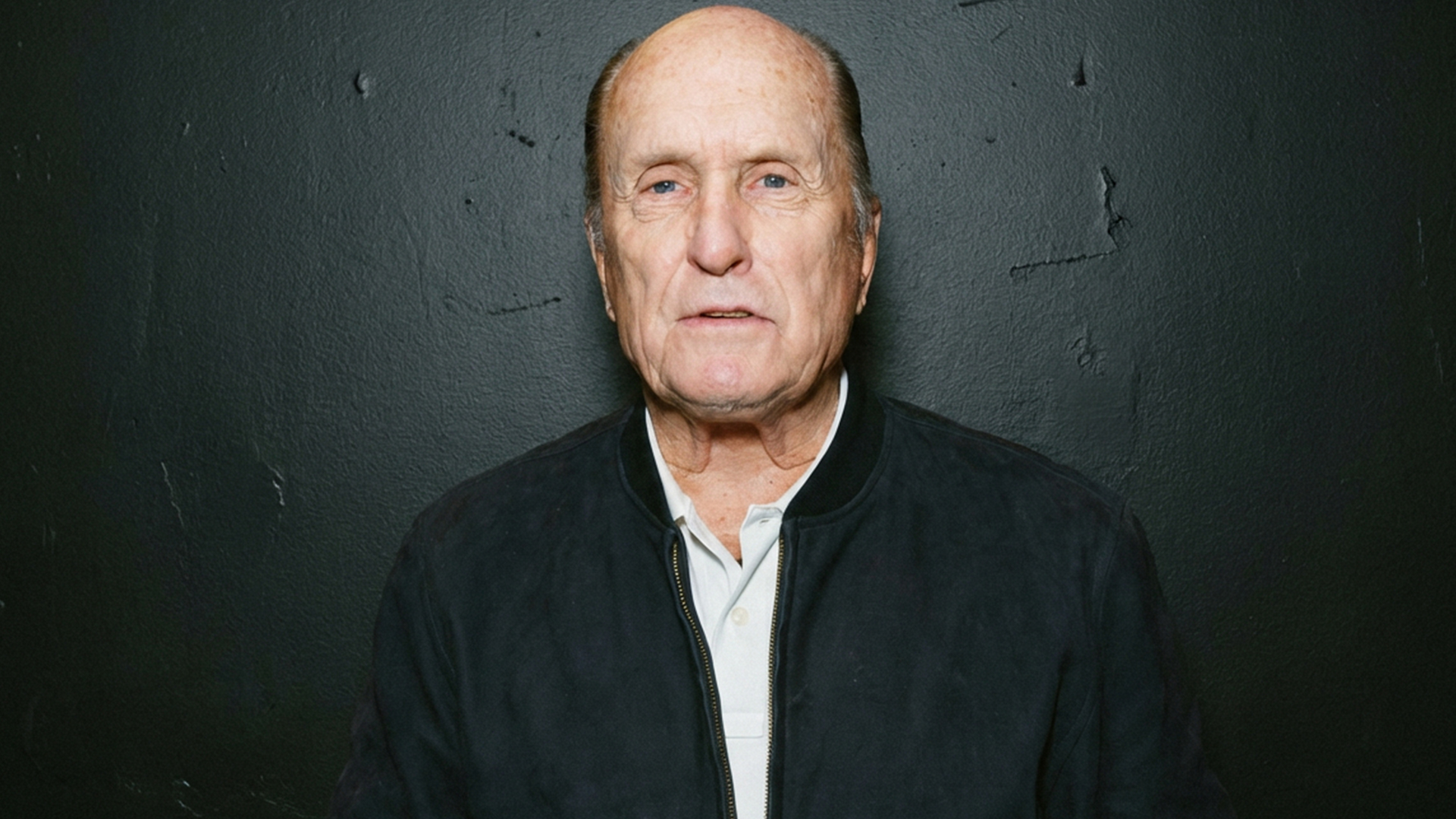


Robert Duvall did not perform characters. He inhabited them.
The Oscar-winning actor died February 15, 2026, at his ranch near The Plains, Virginia. He was 95. His wife, Luciana Pedraza Duvall, confirmed he passed away peacefully at home, surrounded by love and comfort.
“To the world, he was an Academy Award winning actor, a director, a storyteller,” she wrote. “To me, he was simply everything.”
For more than six decades, Duvall built one of the most disciplined careers in American film. He never relied on volume or flash. His power came from restraint. A look. A pause. A line delivered without ornament.
As Tom Hagen in The Godfather and The Godfather Part II, he played the cool-headed consigliere who steadied chaos. In Apocalypse Now, he gave the world Lieutenant Colonel Kilgore and one of cinema’s most famous lines about the smell of napalm in the morning. The role was originally written broader and louder. Duvall scaled it back, grounding it in research and military precision.
He earned seven Academy Award nominations and won Best Actor in 1983 for Tender Mercies, portraying broken country singer Mac Sledge. It remains one of the most understated lead performances in film history.
Duvall insisted on singing his own songs in Tender Mercies. No dubbing. No studio smoothing. He drove across Texas, recording local voices to master the cadence. He spent nights with working musicians to absorb the rhythm of the genre. In his Oscar speech, he thanked Willie Nelson and Johnny Cash. Country music was not a prop. It was something he respected deeply.
That affection carried into Lonesome Dove, where he played former Texas Ranger Augustus McCrae, a role he often called his favorite. He understood the Western code. The silence. The stubborn loyalty. The humor hiding under hardship.
RELATED: Here Are 10 Facts You Probably Didn’t Know About John Wayne’s True Grit
Born January 5, 1931, in San Diego to a Navy admiral father and an amateur actress mother, Duvall moved often as a child. He studied drama at Principia College, served briefly in the Army, and then trained under Sanford Meisner in New York. There, he shared an apartment with Dustin Hoffman and Gene Hackman. All three were outsiders chasing craft over glamour.
For You
His first major screen role came in 1962 as Boo Radley in To Kill a Mockingbird. Even with limited dialogue, he made the character unforgettable. That economy became a trademark.
In The Great Santini, he played a domineering Marine pilot. In Network, a sharp corporate figure. In The Apostle, which he wrote and directed, he portrayed a charismatic yet deeply flawed preacher seeking redemption. He continued working into his nineties, appearing in The Judge, Hustle, and The Pale Blue Eye. Retirement never seemed to interest him.
He could also be uncompromising. He famously clashed over pay and creative decisions surrounding The Godfather Part III, choosing not to return. Colleagues sometimes described him as exacting. But that stubbornness was inseparable from the craft. He cared about authenticity more than diplomacy.
Off-screen, Duvall preferred ranch life in Virginia to Hollywood parties. He rode horses, played tennis, swam, and stayed physically active well into his nineties. In late 2025, he posted a video of himself lifting weights at home, joking about keeping a routine. He and Luciana shared a love of Argentine tango and hosted gatherings far from red carpet glare.
Tributes poured in from peers. Al Pacino called it an honor to have worked beside him. Jamie Lee Curtis praised his performance as the greatest consigliere the screen has ever seen. Adam Sandler remembered him as strong, funny, and generous.
Duvall did not chase trends. He trusted the work.
And the work will outlast him.

Know someone who loves Waylon Jennings?
Pass this story along to your friends and family on Facebook.