

On March 30, 1973, Dueling Banjos, Eric Weissberg’s breakout album, climbed to No. 1 on the country music album chart. Fueled by the cultural explosion surrounding the title track, Weissberg’s instrumental masterpiece brought bluegrass banjo picking to mainstream America—whether the country was ready or not. At the heart of the record’s success was a haunting, unforgettable scene in the 1972 film Deliverance, where “Dueling Banjos” scored a backwoods showdown that left audiences shaken and intrigued.
But the song’s journey to the top wasn’t all back porch picking and cinematic magic. Behind the banjo duel was a tangled legal battle, a composer’s fight for credit, and a lesson for Hollywood on the price of ignoring copyright law.
From Feudin’ to Fame
Originally penned in 1954 by Arthur “Guitar Boogie” Smith, the tune was first titled “Feudin’ Banjos.” A respected guitarist and television host, Smith recorded it as a dialogue between his four-string plectrum banjo and Don Reno’s five-string bluegrass banjo. The track made occasional TV appearances over the years—including on The Andy Griffith Show—but remained largely under the radar.
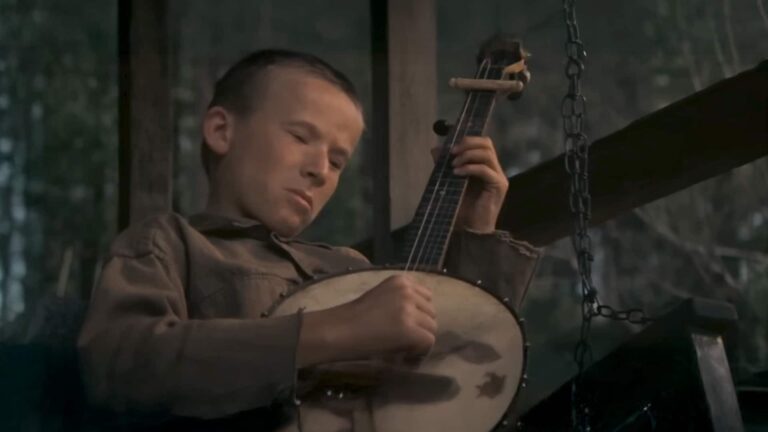
That changed dramatically when Deliverance hit theaters in 1972. Directed by John Boorman and starring Jon Voight and Burt Reynolds, the film thrust “Dueling Banjos” into the spotlight during a now-iconic scene where a city man plays guitar opposite a mute banjo-playing boy in a rural Georgia setting. What followed was a musical call-and-response that was equally riveting and eerie—a sonic metaphor for the cultural tension between urban visitors and Appalachian locals.
The film used an arrangement performed by Eric Weissberg and Steve Mandell, adapted from Smith’s original. When released as a single in December 1972, the track shot to No. 2 on the Billboard Hot 100—held out of the top spot only by Roberta Flack’s “Killing Me Softly with His Song.” It also topped the Adult Contemporary chart and broke the Top 5 on the country singles chart.
The Lawsuit That Made Music History
While the public embraced “Dueling Banjos,” Arthur Smith was fuming. The film and its soundtrack are credited only to Weissberg and Mandell, not mentioning the song’s true composer. Smith hadn’t granted permission for the piece to be used, and he swiftly filed a lawsuit against Warner Bros. and the film’s producers.
After two years of litigation, Smith prevailed. The settlement reportedly earned him a significant financial windfall and restored his rightful credit as the composer. According to lore, Smith joked that the payout bought him a yacht—poetic justice for a man who’d been written out of his own hit. His win was a landmark moment in copyright enforcement, sending a message to the entertainment industry: artistic contributions matter and attribution is not optional.



For You
From that point forward, Smith was credited on all releases, and royalties flowed to the rightful owner. The legal battle turned “Dueling Banjos” into more than a song—it became a case study of what happens when creativity and commerce collide without consent.
A Cultural Milestone That Still Echoes
The Dueling Banjos album, released in January 1973, was mainly based on Weissberg’s earlier recordings on the 1963 album New Dimensions in Banjo and Bluegrass, which was rebranded to capitalize on the film’s success. Weissberg and Mandell won the 1974 Grammy Award for Best Country Instrumental Performance, and the record introduced millions to bluegrass music—many for the first time.
Eric Weissberg himself went on to a storied career as a session musician and folk icon, playing with Bob Dylan, Judy Collins, and John Denver. Yet “Dueling Banjos” would forever remain the centerpiece of his legacy.
Over 50 years later, the song is still instantly recognizable—used in parodies, commercials, and campfire jams. But its staying power isn’t just in the melody or the picking. It’s in the uneasy tension of that Deliverance scene, the courtroom victory of an overlooked songwriter, and the banjo duel that became a cultural touchstone.
On March 30, 1973, “Dueling Banjos” hit the top of the country charts. And even now, that high-lonesome sound hasn’t stopped echoing.
Know someone who loves Arthur Smith?
Pass this story along to your friends and family on Facebook.